


Photographing the Tay Valley Through Changing Seasons
Capture misty mornings, golden afternoons and dramatic skies with practical tips for walkers carrying a camera.

A Valley That Changes Its Mind Every Few Weeks
Dunkeld sits at a bend in the Tay where the Highlands start to make themselves felt. Stand in the cathedral meadow and you can watch the river slide under Thomas Telford's bridge; climb Birnam Hill and the whole strath opens out beneath you in layers of wood, water and hill. Very few Scottish towns put so much photographic variety within an hour's walk. The catch — and the pleasure — is that the valley never holds still. Light, water levels and foliage shift week by week, so a picture you made in March will not be repeatable in June. Here is how to work with each season rather than against it.
Spring: High Water, Bluebells and Fast Light
From late March the snowmelt feeds the Tay and the Braan, and the rivers run full and brown-gold. This is the time for moving water. At the Hermitage, the path up towards Ossian's Hall gives you a series of falls framed by Douglas firs, and a shutter speed between a quarter and one second will smooth the water into something painterly without turning it to milk. A polarising filter earns its place here, cutting glare on wet rock and deepening the greens.
By mid-May the bluebells arrive in the beech woods, and the technique changes. They photograph badly in direct sun, so arrive before eight or wait for cloud. Get low, shoot along the woodland floor rather than down at it, and keep your feet on the path — these colonies take years to recover from being trampled.
Summer: Long Days and the Discipline of Shade
June and July bring enormous days: in late June it is light enough to shoot at half past four and still be out at eleven at night. Use that. The middle of the day is harsh and flat, so either work in the shade of Craigvinean Forest, where the canopy filters the light into something usable, or spend those hours walking and scouting for later. The first hour after sunrise and the last before sunset remain the best of it.
Summer is also midge season. A head net, repellent and long sleeves are not optional if you plan to stand still beside water at dusk. The upside is calm water and long reflections, and an evening on the shores of Loch of the Lowes can keep you busy for hours.
Autumn: The Season the Valley Does Best
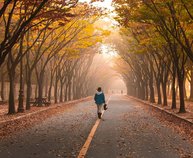
If you can only carry a camera here once, come in October. Birnam Hill, Craigvinean and the slopes above Dunkeld turn gold, russet and copper, and the first cold mornings produce mist inversions that fill the strath while the summits stand clear. The classic shot — a sea of cloud with Schiehallion or Ben Vrackie breaking through — needs an early start and a head for heights on the climb in the dark.
Autumn also rewards patience with exposure. Bright sky above dark woodland is a wide range for any sensor, so either fit a graduated filter or bracket three frames and blend them later. A polariser cuts haze and lifts wet colour. Look for backlight as well: a low sun behind a beech canopy turns the leaves to stained glass and gives you the golden afternoons this valley is known for.
Winter: Frost, Low Sun and Short Windows
Winter light here is extraordinary. The sun barely clears the hills, so you effectively get golden hour from mid-morning until mid-afternoon. Frost on the cathedral lawns, ice along the Tay and snow on the higher tops make even simple compositions sing. The trade-off is a very short working day, so plan around a window of roughly 10am to 2pm and check the times of sunrise and sunset before setting out.
Cold drains batteries quickly. Carry spares in a jacket pocket rather than a rucksack, keep a microfibre cloth for condensation when you come back into the warm, and let your kit acclimatise slowly to avoid fogged lenses. Snow and ice underfoot mean proper boots and, on hill paths, a steady eye on the fading daylight.
Kit, Timing and Walking Well
You do not need much: a single body, a mid-range zoom, a light tripod for woodland and dusk, a polariser, a spare battery and a waterproof cover or dry bag. After that, timing matters far more than gear.
- Check the forecast twice. A clearing front after rain often produces the best light of the week.
- Walk in, shoot out. Use flat light to scout compositions, then return when conditions suit.
- Respect the ground. Follow the Scottish access code, keep to paths in bluebell woods, close gates and carry everything home.
- Tell someone your route and take a headtorch, especially on short winter days.
The Tay Valley rewards anyone willing to return at different times of year. Learn its rhythms, and the photographs will follow.

Post a comment